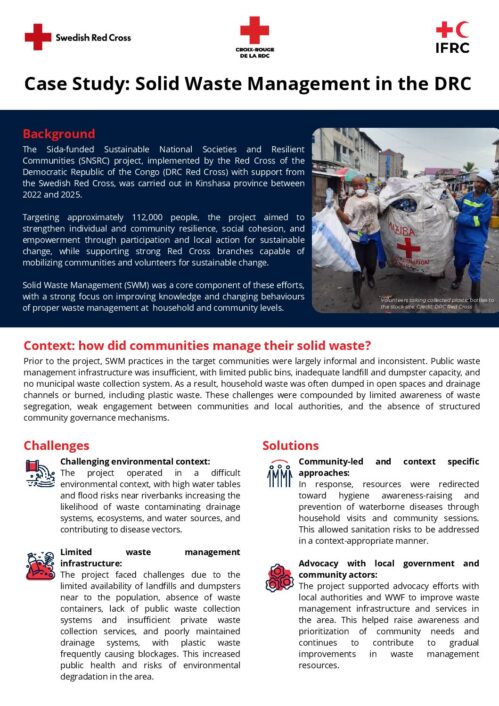
Between 2022 and 2025, the DRC Red Cross, with support from the Swedish Red Cross and funding from SIDA, ran a project in Kinshasa province to improve how communities manage solid waste. The project reached around 112,000 people.
The problem: Before the project, there was no organized waste collection. People dumped or burned household waste, including plastic, which polluted drainage systems and increased flood and disease risks.
What the project did:
- Trained volunteers made home visits and ran community sessions to teach waste separation and hygiene practices.
- Partnered with recycling company (KINTOKO) which generated income from plastic waste for the Red Cross sub-branch (neighborhood level)
- Supported communities in advocating with local authorities for better waste infrastructure, such as land for waste disposal and access to clean water.
Key results:
- Households are increasingly separating waste at home.
- Plastic recycling is now common and generates income for neighborhood groups.
- One community (Nsola) secured public land for waste disposal and a public borehole through successful advocacy.
- Communities now lead their own waste management activities, like cleaning drains and running awareness sessions in schools and markets.
Key lessons:
- Behavior change works best with trusted local volunteers, repeated simple messaging, and practical demonstrations — especially when there’s a small income incentive.
- Community advocacy can achieve real results, but scaling it up long-term requires stronger, ongoing partnerships with local government.

 English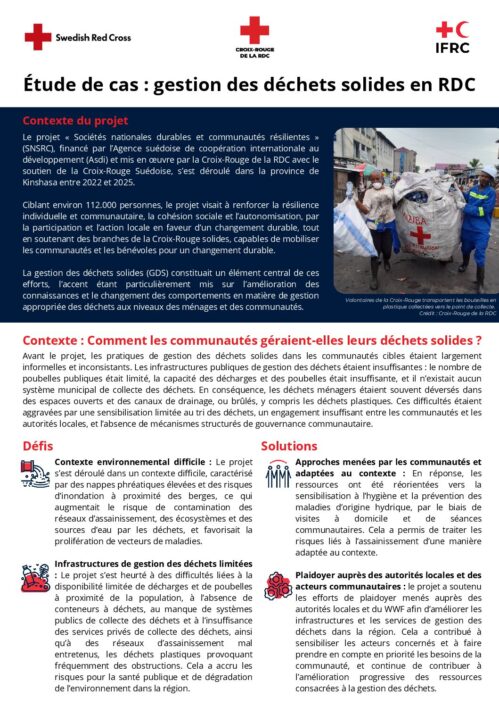
 French