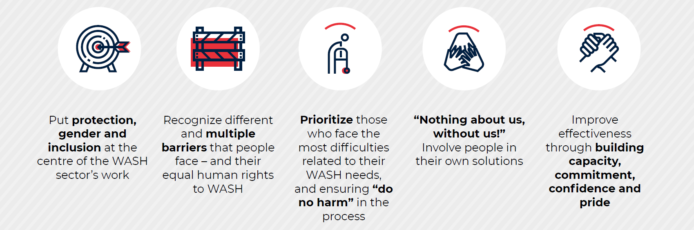
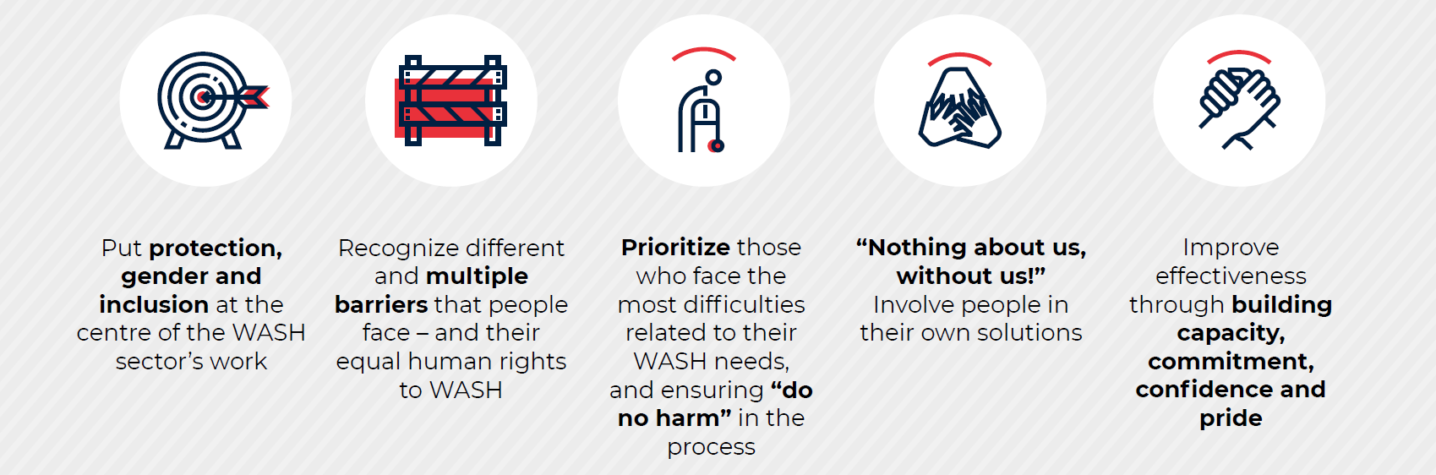
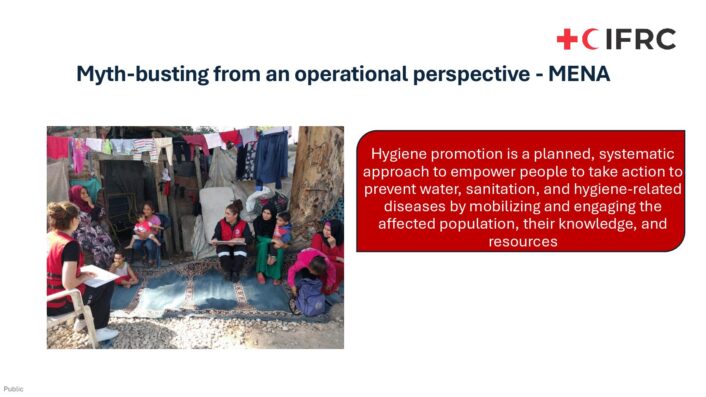
WASH is fundamental for the dignity, health and wellbeing of everyone – regardless of their age, disability, social status, gender identity or ethnicity.
We know that addressing protection, gender and inclusion (PGI) in WASH is important: it reduces the risk of violence, discrimination and exclusion and contributes to building safe and resilient communities where no-one is left behind.
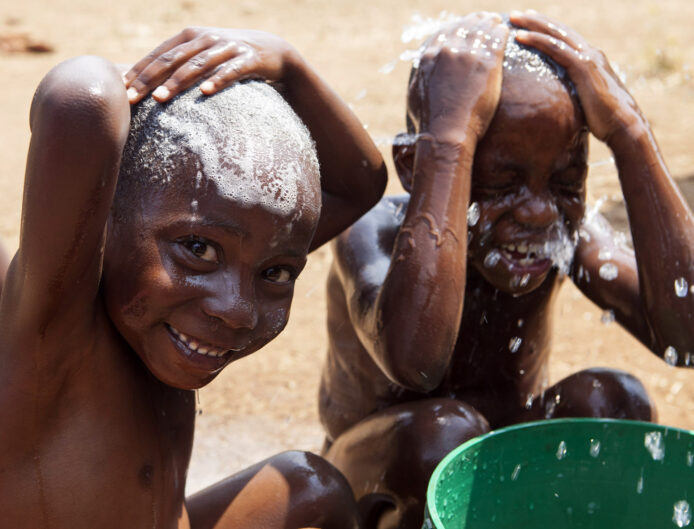
Moving from a one-size fits all approach to people-centered WASH
Dignity, access, participation and safety (DAPS) are the four principles which guide WASH programmes and activities in addressing protection, gender and inclusion. Learn more what these principles mean in a practical way for WASH.

For WASH this means: everyone has access to water and sanitation facilities and the items they need to be able to manage their personal and household WASH needs in a way they want to, in accordance with their cultural context, and which supports their feelings of confidence, wellbeing and self-esteem. Adequate water and private facilities for personal hygiene (including menstrual hygiene and incontinence) and maintaining cleanliness (including of children, persons with disabilities, older people and people with chronic illnesses) are vital for safeguarding the dignity of individuals.

For WASH this means: WASH facilities, services and information are designed and implemented in a way so that everyone can use them, understand them and benefit from them. Cultural stereotypes and norms around gender, age and disability affect decision-making arrangements, and access to power, resources, public participation and even to water itself, and need to be considered in all phases of WASH programmes.

For WASH this means: everyone in a community – regardless of their gender, age, disability or background – has their voice heard and is actively involved in decision-making for the selection, design, construction and ongoing operation and maintenance of WASH facilities and services.

For WASH this means: everyone feels comfortable and safe to use WASH facilities and services, and that their design, location and operation minimizes risks of violence. Vulnerability to violence is increased by a lack of safe and secure sanitation infrastructure, particularly in emergency contexts where there can be lack of privacy, overcrowding and lack of lighting in communal spaces and facilities.
Access to knowledge and continuous learning are essential for improving WASH outcomes. Our learning resources provide staff, volunteers, and partners with practical tools, training materials, and case studies to strengthen their understanding of community-driven approaches. By investing in learning, we build the capacity to design and implement impactful WASH programs that promote dignity, health, and inclusion.
PGI and WASH alphabet soup (English)
PGI and WASH alphabet soup (Spanish)
PGI and WASH Episode 2: How to incorporate SADD data into WASH surveys