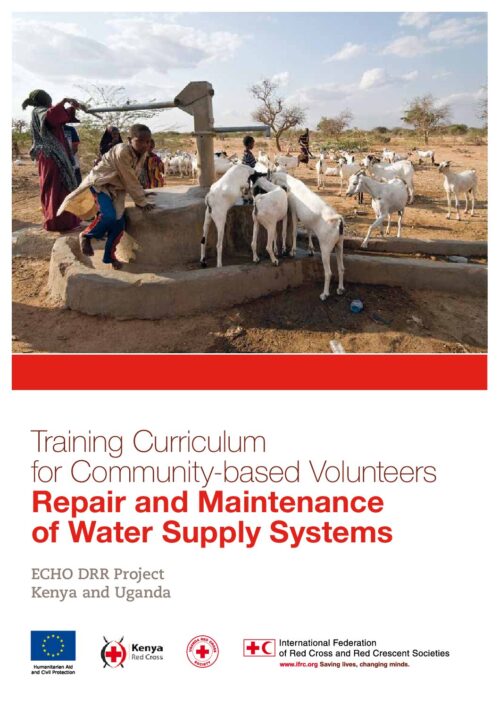
This training curriculum prepares community volunteers to operate, maintain and repair rural water supply systems. It was developed for the ECHO disaster risk reduction (DRR) programme in Kenya and Uganda in 2013, and can be adapted for many other contexts.
The five-day course can be used as a whole, or topic by topic. It explains how different water systems work and what goes wrong with them, including rainwater harvesting, handpumps, solar pumping, wind pumps, diesel engines, boreholes, shallow wells, sand dams and pipelines. Each topic has a troubleshooting chart that helps volunteers find the problem and fix it.
The curriculum also includes sanitary surveys, exercises for planning ahead of a drought, and a practical assessment so that trained volunteers can be certified. The drought module supports anticipatory action by helping communities plan before a drought peaks.
It is useful for National Societies, water committees and partners who want to strengthen community-managed water services and reduce disaster risk.
The handouts, checklists and tools from this curriculum are available as separate Word documents. They include forms, troubleshooting charts, checklists, illustrated handouts and training exercises that you can use on their own or adapt. See below or wash.ifrc.org/toolbox/

 English